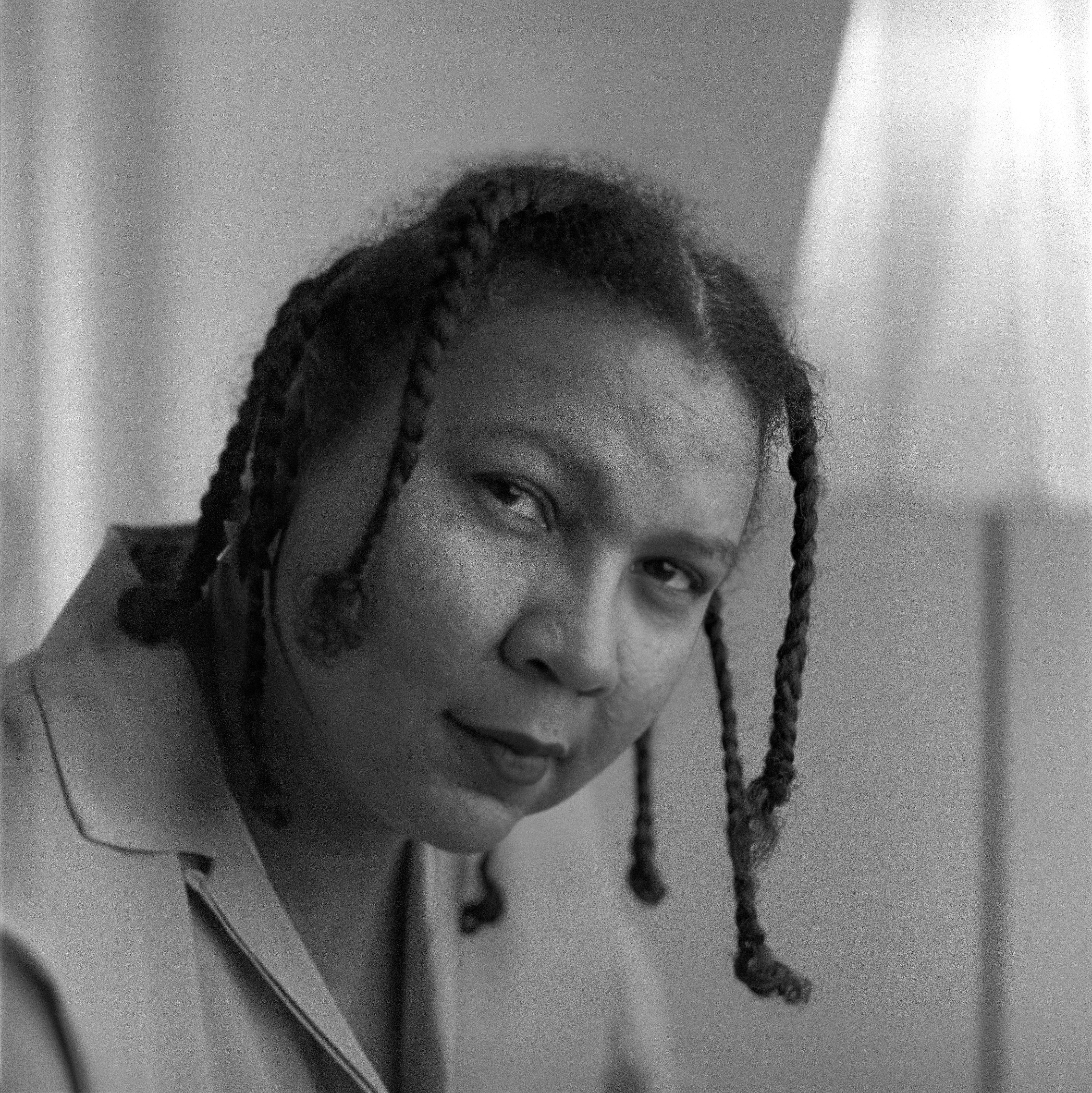
→ Image of the author

Write a reflection on the book you read →
This was my first feminist read and my first non-fiction read in a while, and I do not regret deciding on it. Checking this out at my college library, I was initially self-conscious for some strange reason. I suppose it’s because I am black and the title is very in-your-face about the books general target audience. However, I feel this book is not only important for black women to read, but is generally a good read for anyone interested in learning about how conceptions about black women in society came to fruition.
Going into this book, I was shocked of the many things I learned that I had failed to be caught in school, for example, the beginning of the book covers the colonial patriarchal aspects of white women being considered sinful and promiscuous, and how this led to the lean of preferring pure, traditional and Christian women. This lean occurring around the same time as slavery made black women raped and assaulted without consequence due to both the wives not wanting to have sex, and the view of them as being impure and sexually tempting. This introduces me to the idea of the jezebel/sapphire, along with the enduring “independent” black woman that is still so widespread today, an independent black woman who is being forced to endure as a production of her environment and past hardships.
Notes consisted of facts relating to these topics learned upon reading the book, which I will put in the “newly learned” section on this page rather than in the review.
I must admit, learning all this information made me feel disappointed, but that is consistent with all feminist literature I read, it is hard for me to feel I have power like these authors tend to state so strongly by the end of the books, and I mostly skip over them in some aspects. This however, is a consequence of myself and my own thinking in which I must overcome.
Overall, this was a good read, and entertaining and shocking with the author’s examples and quotes cited. I finished it quickly.
<aside> 📝 Book Notes
"Colonial men had sex with animals and etc. which resulted in heavy sexually repressive laws implemented and the blame placed onto women and Christian teachings saying they were sinful beings who could only be purged by God. This also relates to the sexual violence directed towards female slaves in the current book I am reading, it exposed the barbaric nature of men during the time.
360 was done where WW women were seen as pure, inspirations as long as they had no sexual thoughts. This rid them of the stigma/shame of Christianity. > A lot of women accepted this due to difficulty of childbirth > happened at the same time as slavery; WM raped and assaulted black female slaves. (Hatred of women + racism)
Contemporary authors tried to argue this contributed to emasculation of Black men during slavery, yet African enslaved men did not feel obligated to protect African enslaved women outside of their tribe until after they were enslaved > were focused on self preservation and sometimes would let their wives and children be raped to avoid being killed or whipped.
Black female slaves therefore had no protection, WW tormented them, encouraged the use of them as sex objects to not be forced to have sex and let their sons use them. Black male slaves also raped them without consequences since it was not considered rape. > Black female slaves were also seen as sexual temptresses due to previous religious teachings and were not protected or pitied even when pregnant.
[Yes, sir; the most shocking thing that I have seen was on the plantation of Mr. Farrarby, on the line of the railroad. I went up to his house one morning from my work for drinking water, and heard a woman screaming awfully. On going up to the fence and looking over I saw a woman stretched out, face downwards, on the ground her hands and feet being fastened to stakes. Mr. Farrarby was stand ing over her and striking her with a leather trace belonging to his carriage harness. As he struck her the flesh of her back and legs were raised in welts and ridges by the force of blows. Sometimes when the poor thing cried too loud from the pain Farrarby would kick her in the mouth. After he exhausted himself whipping her he sent to his house for sealing wax and a lighted candle and, melting the wax, dropped it upon the woman's lacerated back. He then got a riding whip and, standing over the woman, picked off the hardened wax by switching at it. Mr. Farrarby’s grown daughters were looking at this from a window of the house through the blinds. This punishment was so terrible that I was induced to ask what offence the woman had committed and was told by her fellow servants that her only crime was in burning the edges of the waffles that she had cooked for breakfast.]
Black enslaved women who could not have children were treated horribly and those who were, were "bred" with WM to make mulatto children as it brought it more money. > They were also bribed to breed with clothes and gifts but many of these gifts were not given or lies
Black male slaves refused to do work deemed "women's work" as they further became absorbed into the roles of dominant culture > slaves were whipped if they did not follow these values within their homes in huts provided on some plantations. > Black male slaves were also considered to have higher societal value than the females.
Black female slaves began to desire the values given by WW in society (to be treated ladylike and to take care of her husband) due to this being seen as degrading in the dominant culture
1/6
[Those black women suffered most whose behavior best exemplified that of a "lady”. A black woman dressed tidy and clean, carrying herself in a dignified manner, was usually the object of mud-slinging by white men who ridiculed and mocked her self-improvement efforts. They reminded her that in the eyes of the white public she would never be seen as worthy of consideration or respect ]
Due to the poor reputation of black women after slavery as being sexually promiscuous, the sexual assault or harassment or rape or exploitation of them were ignored and considered her own fault.
Even after Jim Crow, these depictions still result in BW being taken less seriously by WM and just other nonblack men in general in their relationships with them vs WW and BM relationships.
[The images of black women that are seen as positive usually are those that depict the black woman as a longsuffering, religious, maternal figure, whose most endearing characteristic is her self-sacrificing self-denial for those she loves.]
"While an awareness of male power to rape women with impunity in a patriarchal society is necessary for woman’s survival, it is even more important that women realize that they can prevent such assaults and protect themselves should they occur." > Do not let yourself suffer in learnt/mental helplessness."
</aside>